


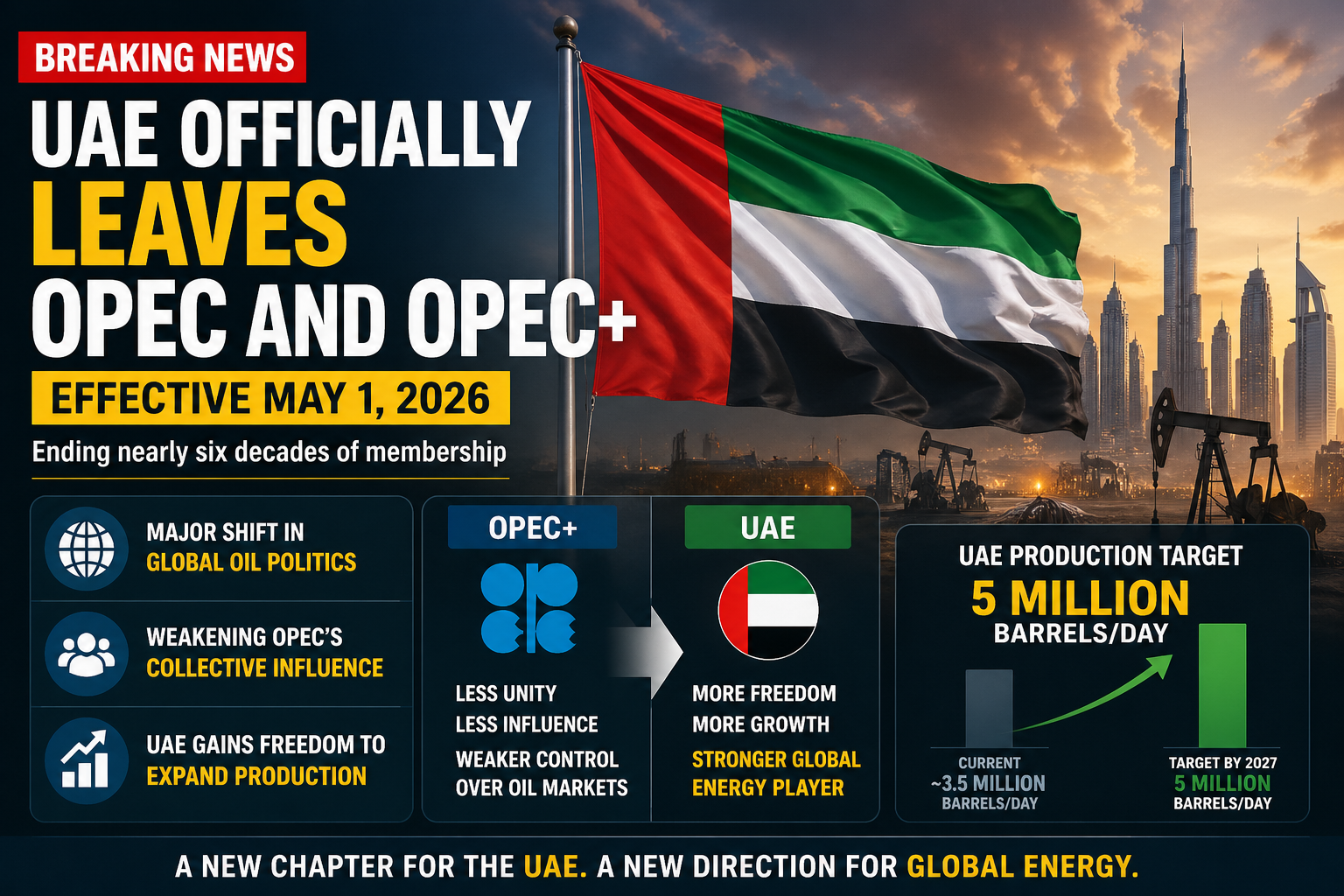
“The UAE leaves OPEC in 2026, marking a historic shift in global oil politics. Learn why the UAE is leaving OPEC, what OPEC+ means, and the impact on OPEC countries and oil prices worldwide.”
🌍 What is OPEC?
- OPEC (Organization of the Petroleum Exporting Countries) is an intergovernmental cartel founded in 1960 in Baghdad by Iran, Iraq, Kuwait, Saudi Arabia, and Venezuela.
- Purpose: Coordinate petroleum policies, stabilize oil markets, ensure steady income for producers, and reliable supply for consumers.
- Headquarters: Vienna, Austria.
- Influence: Controls ~80% of proven global oil reserves and ~38% of global oil production.

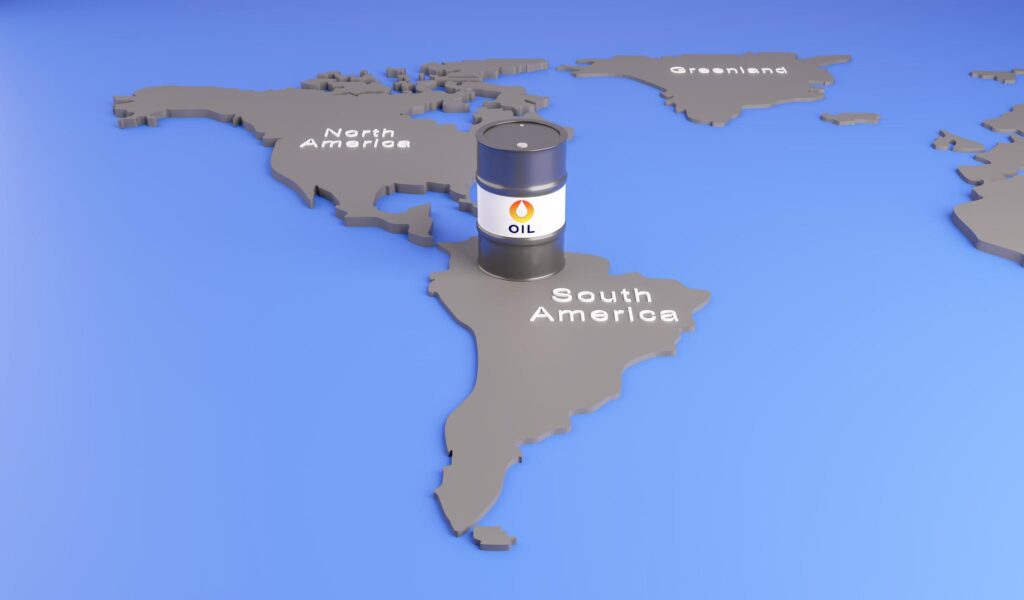


🔑 What is OPEC+?
- OPEC+ was formed in 2016, adding 10 non-OPEC producers (notably Russia, Kazakhstan, Azerbaijan, Oman).
- Goal: Broader coordination to manage oil supply and prices, especially after U.S. shale oil disrupted markets.
- Combined Influence: OPEC+ countries produce ~59% of global oil, making their decisions critical for price stability.


🇦🇪 Why is the UAE Leaving?
- Production Ambitions: UAE wants to expand capacity to 5 million barrels/day by 2027, but OPEC quotas restricted growth.
- Geopolitical Tensions: Repeated Iranian attacks on UAE oil infrastructure and shipping in the Strait of Hormuz undermined its security.
- Strategic Autonomy: UAE seeks flexibility to adjust production independently, aligning with its national economic diversification strategy.
- Strained Relations: Longstanding friction with Saudi Arabia over quotas and regional influence accelerated the decision.


🛢 Current OPEC Members (2026)
| Region | Countries |
|---|---|
| Middle East | Saudi Arabia, Iran, Iraq, Kuwait |
| Africa | Algeria, Libya, Nigeria, Gabon, Equatorial Guinea, Republic of the Congo |
| South America | Venezuela |
| (Until May 1, 2026) | United Arab Emirates (leaving) |


⚠️ Global Impact of UAE Exit
- Market Stability Risk: Loss of ~15% of OPEC’s capacity weakens collective supply management.
- Price Volatility: OPEC’s ability to stabilize prices during shocks is reduced.
- Geopolitical Shift: UAE’s departure signals growing fragmentation among Gulf producers, potentially “the beginning of the end of OPEC.”
- U.S. Advantage: The move aligns with U.S. criticism of OPEC price manipulation, giving Washington more leverage.

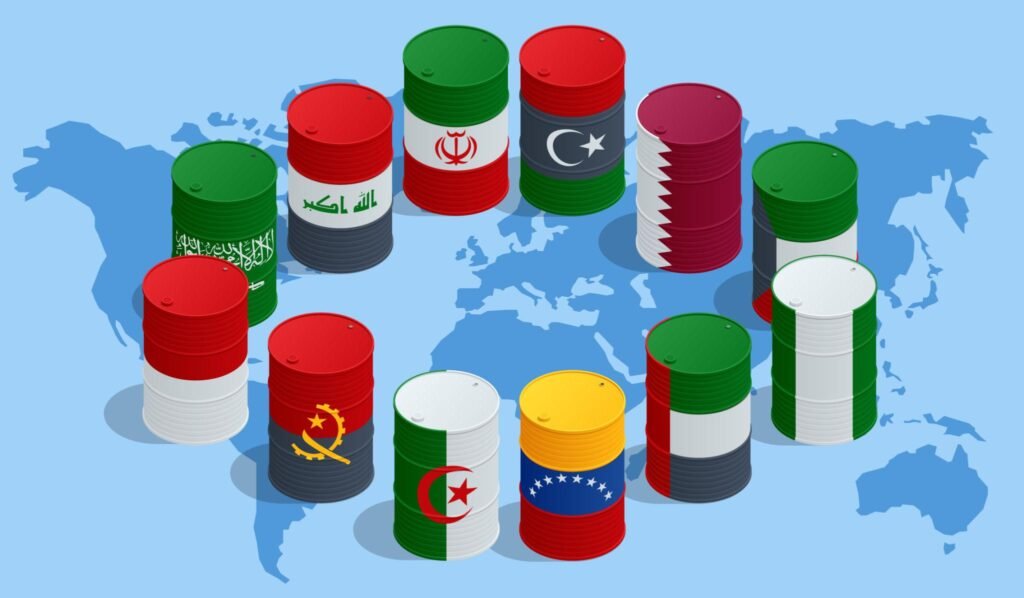
👉 In short: The UAE’s exit from OPEC is both a geopolitical and economic turning point. It reflects frustration with quotas, security threats from Iran, and competition with Saudi Arabia. For global markets, this means more uncertainty, less coordinated supply management, and potentially greater price swings in the years ahead. Would you like me to break down how this could affect oil prices in India specifically?
Leave a Reply Cancel reply